

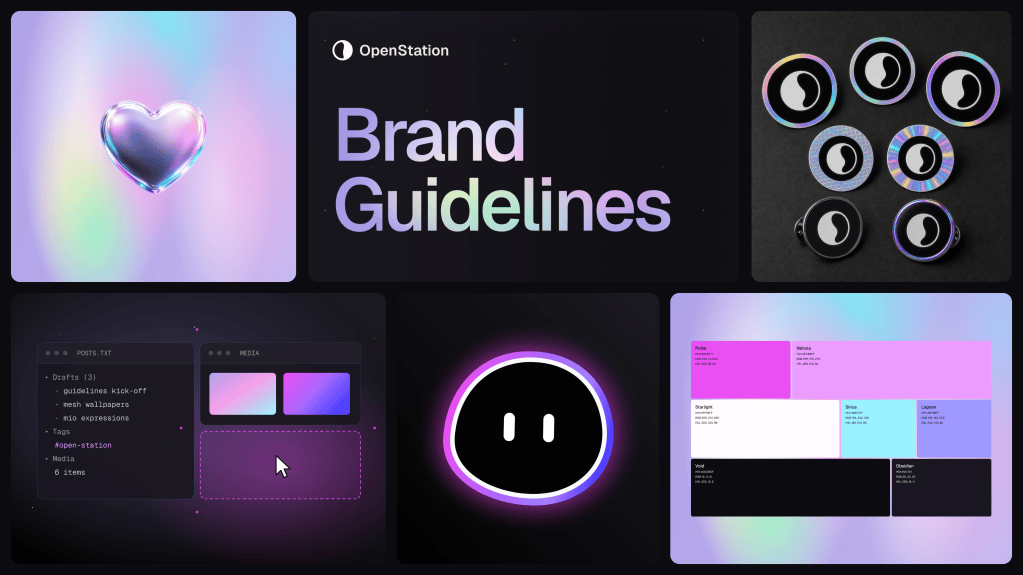
So when I looked back at how OpenStation’s brand came together, I noticed something: I dumped all my chaos on AI, and some of it worked. Some of it really didn’t. And the difference between the two taught me more than the result.
I always thought my chaos was the thing slowing me down. It turns out I just never had anything that could keep up with it.
A messy start
OpenStation is an open-source WordPress plugin that turns wp-admin into a desktop OS. It had a name and some vibes but no brand, and it needed one fast. That’s where I came in, even though I’m not a brand designer. I’d just have to become one quickly.
My brain was already full of ideas, so I started dumping everything into Figma. Ugly little drawings, the same shape drawn thirteen times… Then I spent a couple of (or maybe a hundred) hours on Pinterest, saving anything that sparked something. It all ended up in a very full, very messy moodboard.
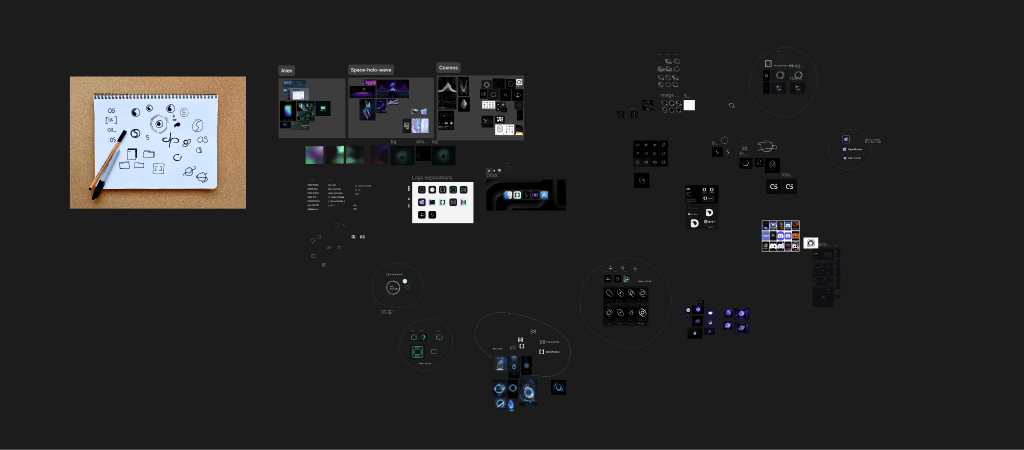
And then I fed it all to AI. A sketch, a color, a screenshot, and a note that said “not this, more that” (which is apparently a valid prompt now).
It came back with fifteen ideas, most of them wrong. And that was the useful part. Every wrong answer showed me something I didn’t want and sent me back to the board. Paper, Figma, AI. Repeat.
AI didn’t need me to clean up my thinking before beginning to work. It just kept up.
Then I just kept feeding it
Somewhere in that loop, I defined the concept: Spaceholowave.
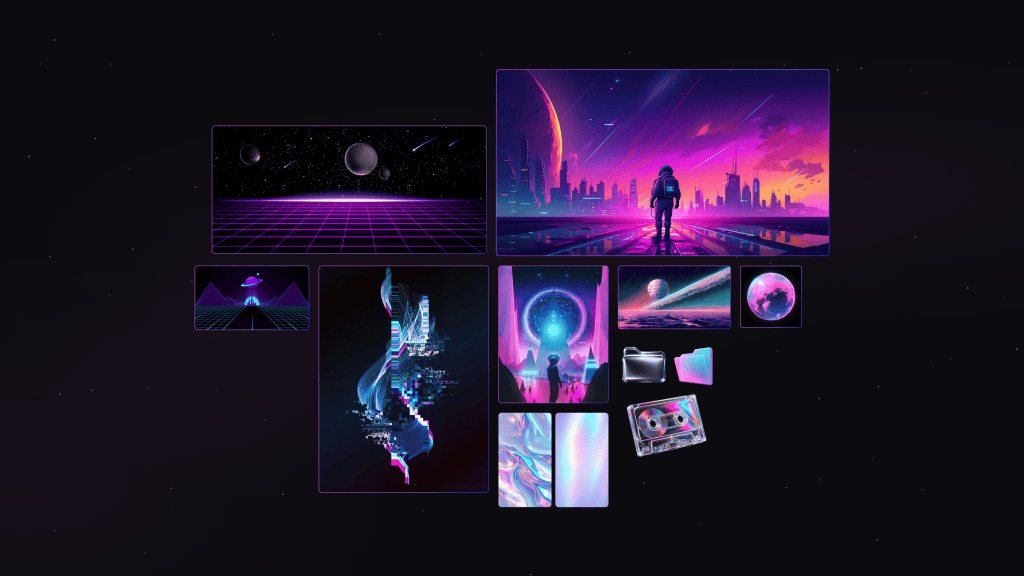
It’s a word I made up to force all my nerd references into something that had to make sense. Space, the holodoor from No Man’s Sky, synthwave, cyberpunk, all floating in a dark void.
AI was great at this part: Mixing references that don’t belong together. Creating outputs with some sense and logic. I’d throw in a bunch of references and get back a direction I could react to. The LLM didn’t have taste, but it was fast, and at this stage speed was what I needed.
Where it broke
With the logo.
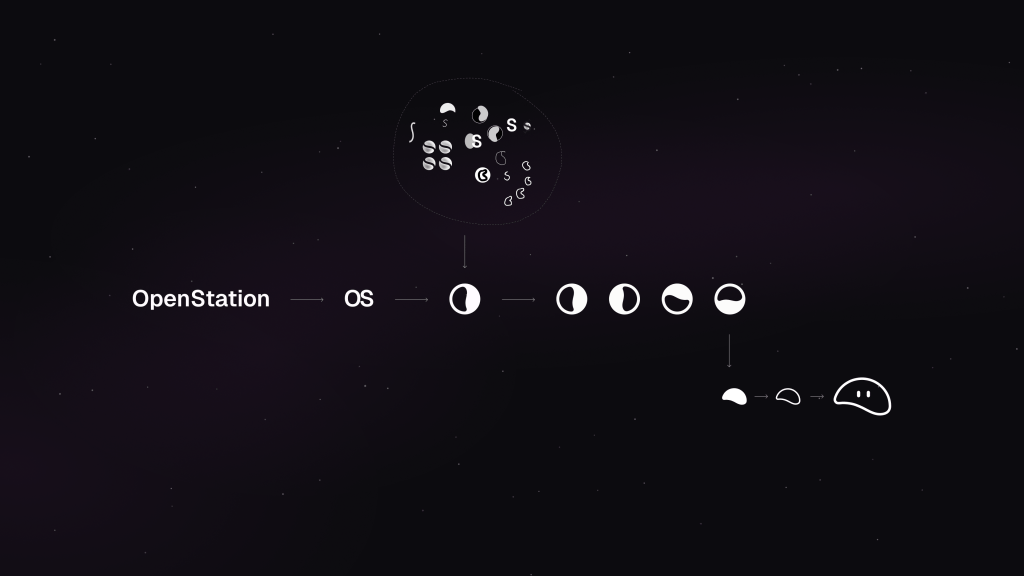
Logos live on tiny optical decisions: a curve thinned where it meets the ring so the joint doesn’t look heavy, a blob that’s a little off-center because centered looks wrong. None of that is math. It just has to look right.
I knew the O and the S had to live inside the same shape, so I tried to get the exact curve I needed, looking for harmony. I’d ask for subtle tweaks of the logo and get back five useless logos that weren’t mine. Hours of it. At some point I literally typed something like “why? WHY???”
So I closed the chat, opened Figma, and drew it myself.
A brand is real when you have a sticker
Once I had the logo and the style, the rest was a process of pure fun, joy, and experimentation.
I went a bit bananas on merch mockups, holographic stickers, and enamel pins, which sounds like a detour but works as a test: if a mark survives at the size of a one-euro coin, it survives as a favicon.
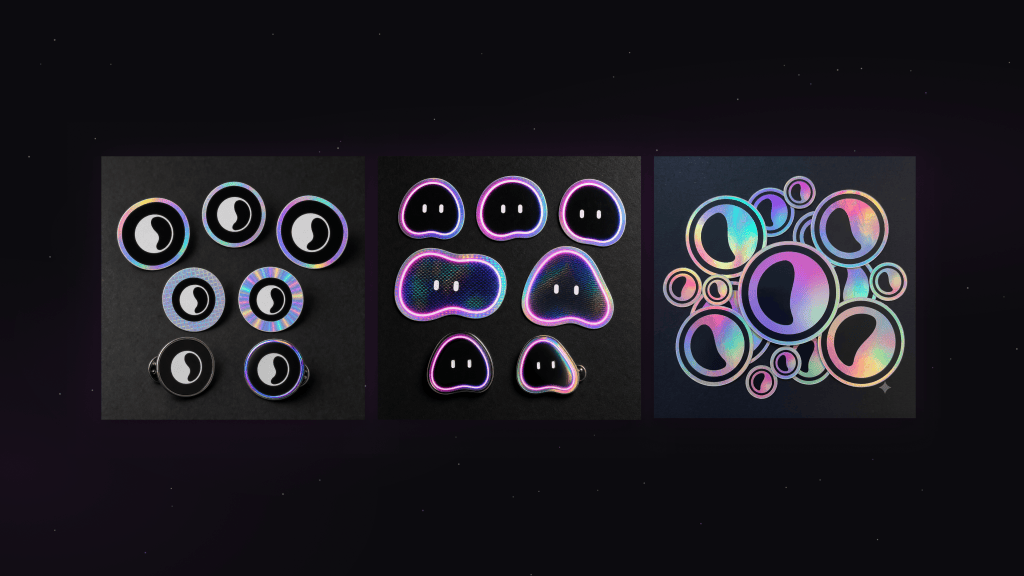
Then the rest designed itself. The landing page, the brand guidelines, marketing materials, etc. One thing I found particularly useful was designing everything in plain HTML to try out different designs before implementing them in the codebase.
The guidelines ended up public and hooked into the agents our team uses. Now anyone can make a wallpaper or a widget icon, and the output will match the OpenStation branding.
Go poke at the brand guidelines, and if you try out some experiments, I’d love to see what comes out. You can always reach me at nuria.pena@automattic.com.
What I learned
AI is great at “kind of” and bad at “exactly.”
It’s useful when mixing references, finding a direction, making throwaway things to test an idea. But when precision matters, you can’t rely on it. At some point, you have to be the one holding the pen.
I also learned that taste isn’t something you need to describe. It’s something you react with. I never gave a clean brief; I just kept saying “not this,” and every wrong answer got me closer.
And maybe the most useful thing I learned: AI is good at extending a system, but it can’t start one. Once the logo was right, everything else could grow from it. But that first decision had to come from someone looking, caring, and crafting.
So, am I a brand designer now?
No. Brand designers spend years building the eye that picks the right option, and I’m sure a specialist would have done some things differently.
But looking back, I recognize every decision. The references were mine. The mark was drawn by hand after I gave up on AI. The type, the color, what was shipped, and what got thrown away. What AI gave me was range: more options, faster, across more surfaces than I could cover alone.
And range is exactly what a messy brain needs. It helps me explore wider without worrying about getting lost along the way. Now all those “what if…” moments actually go somewhere.
If you’re a designer who’s always felt a bit too messy for a clean process, now you finally have something that can keep up. Your mess might be more useful than you think.


Leave a Reply