

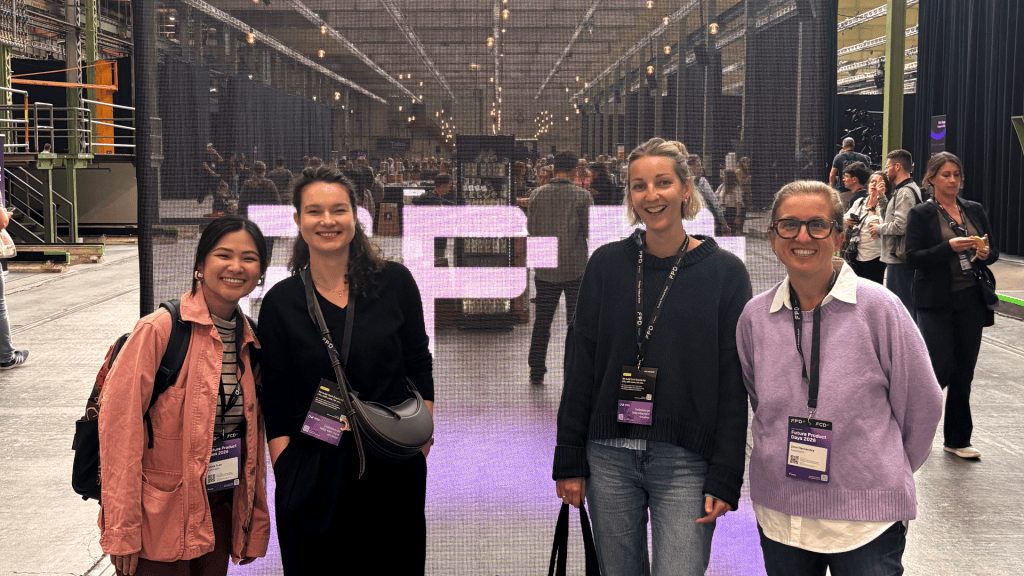
Unsurprisingly, AI was a big topic throughout the conference. But what interested us most wasn’t so much what AI can do, but how it’s changing the way we work, the decisions we make, and what people expect from the products we build.
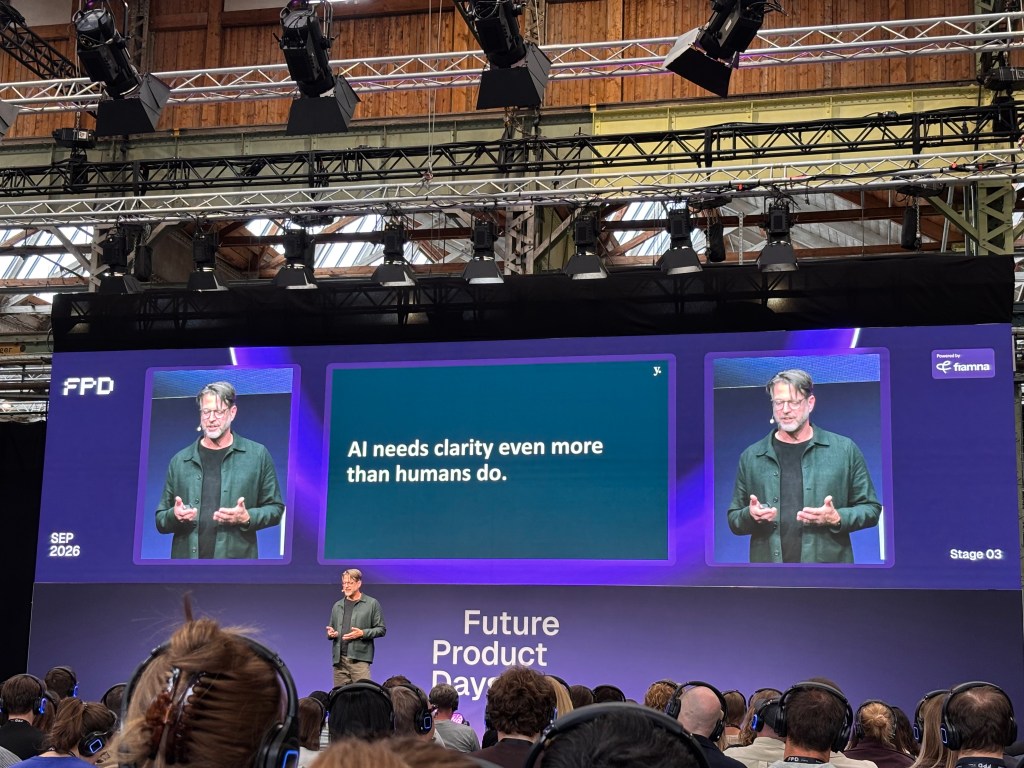
It was also reassuring to hear others talking about challenges we’re facing ourselves. There’s a lot of excitement around AI, but also plenty of uncertainty about how to use it well. It seems nobody has really figured it all out yet.
Just because you can build it doesn’t mean you should
The talk that resonated with most of us was by Nicole Alexandra Michaelis from Pleo: “When building is cheap, judgment is the whole job.”
Her point was simple: AI has made it incredibly easy to create something that looks and works reasonably well. But that doesn’t necessarily make it a good product. She described how, under pressure to move faster with fewer people, her team had started relying too much on AI to make decisions. The result was work that was perfectly competent but, in her words, “dead inside.” Everything worked, but something was missing.
We’ve seen this in our own work, too. AI makes it much easier to explore ideas and build prototypes, but it’s also easy to end up with something that looks polished without really solving a problem. We still need to question the output, challenge decisions, and sometimes recognize that something isn’t worth building in the first place. And that’s not just a designer’s responsibility. Anyone on the team can ask whether we’re solving a real problem or simply building something because we can.
How much should AI decide for us?
Another question that came up in a few talks was how much control people should have over the products they use.
Joacim M. Jeppesen from Framna argued that the best products will increasingly be those that make decisions for us, removing work we’d rather not do ourselves.
Sarah Thompson from Nielsen Norman Group approached the topic differently. She talked about how removing too much friction can also diminish people’s sense of ownership. When everything is done for us, we might value the result less because we haven’t really contributed to it.
We don’t think there’s one right answer here. It really depends on what someone is trying to do, and how much they care about being involved in the process. Take setting up an online store, for example. A designer might enjoy spending time choosing fonts, adjusting layouts, and making sure everything looks exactly the way they want. Someone opening a small bakery, on the other hand, might not care much about any of that. They just want a store that looks good, works well, and lets them sell their products.
The same decisions can be important to one person and completely irrelevant to another. So perhaps the question isn’t how much work AI can take away, but which decisions people actually want to make themselves.
This also connects to Christian Kuhn’s workshop, “Don’t Make Me Prompt.” As more products introduce AI, we’re seeing many interfaces that consist of little more than a text field. But asking people to write a prompt, especially when they don’t know exactly what they want, isn’t necessarily making their lives easier. Sometimes it’s much simpler to choose between a few options, react to a suggestion, or have a conversation. Christian explored how different ways of interacting, including touch and voice, can work together instead of relying entirely on typing. We don’t need to turn every interaction into a chatbot.
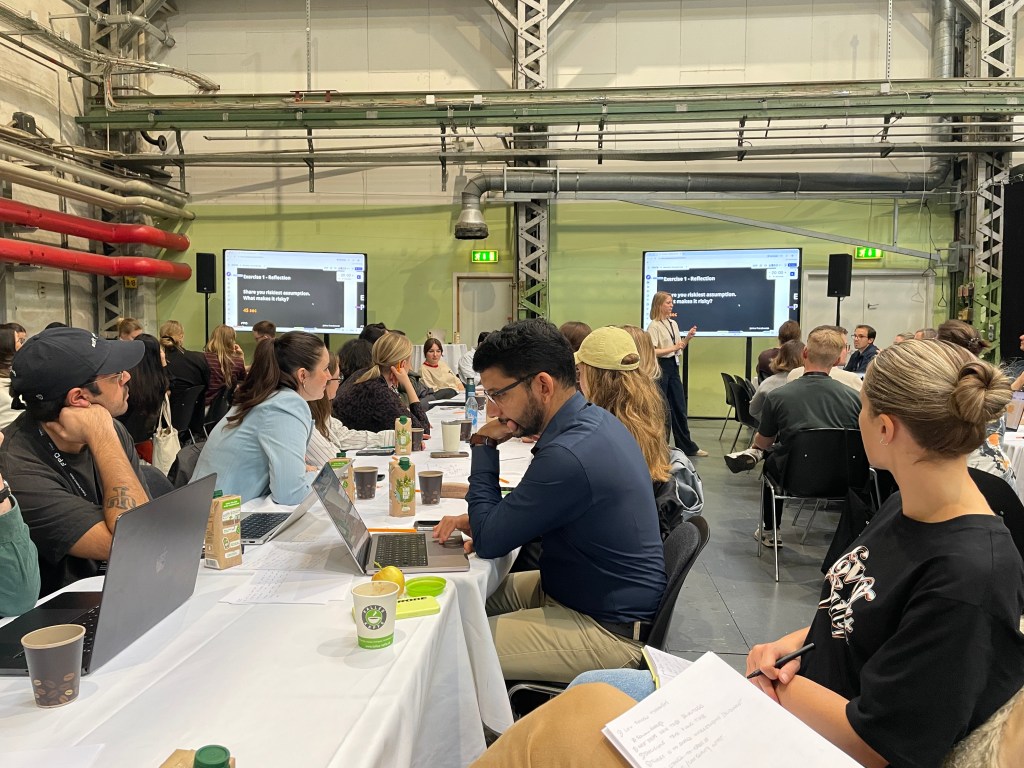
What happens to the interface?
There was also quite a bit of discussion about how interfaces themselves might change.
Erin Essex from YouTube talked about moving from UX design to “context design.” Instead of designing fixed screens, designers might increasingly define the components and rules that allow a product to adapt to different people and situations.
Niek van Esch from Centraal Beheer raised a similar question: what happens to our role when the interface starts to disappear?
If interfaces become more dynamic and personalized, we’ll need to spend more time designing how the system behaves, not just how it looks. When should it make a decision? What should it ask the user? How do we make sure people understand what’s happening and can change things when they want to?
Working differently
All this talk about building faster also made us think about whether the way we plan and make decisions is still relevant.
Jesper Nørding Pedersen talked about how product teams can now build and test ideas in days, while leadership and planning processes often still move much more slowly. That felt familiar. We’ve seen how much easier it is to get people on the same page when we can show them a working prototype instead of spending weeks discussing an idea. It doesn’t mean every decision becomes easier, but it does give everyone something concrete to try out and discuss.
Christoffer Vinther-Høj raised a similar question in his workshop: if we can test ideas, learn, and change direction so quickly, do traditional roadmaps still make sense?
We also noticed that some of the talks we enjoyed most weren’t necessarily the ones closest to our own roles. With design, product, and engineering becoming more connected, it was interesting to hear the ways people in other disciplines approach problems.
Keeping humans at the center
One of the highlights of the conference was hearing Don Norman. At 90, he was sharp, funny, and very optimistic about AI.
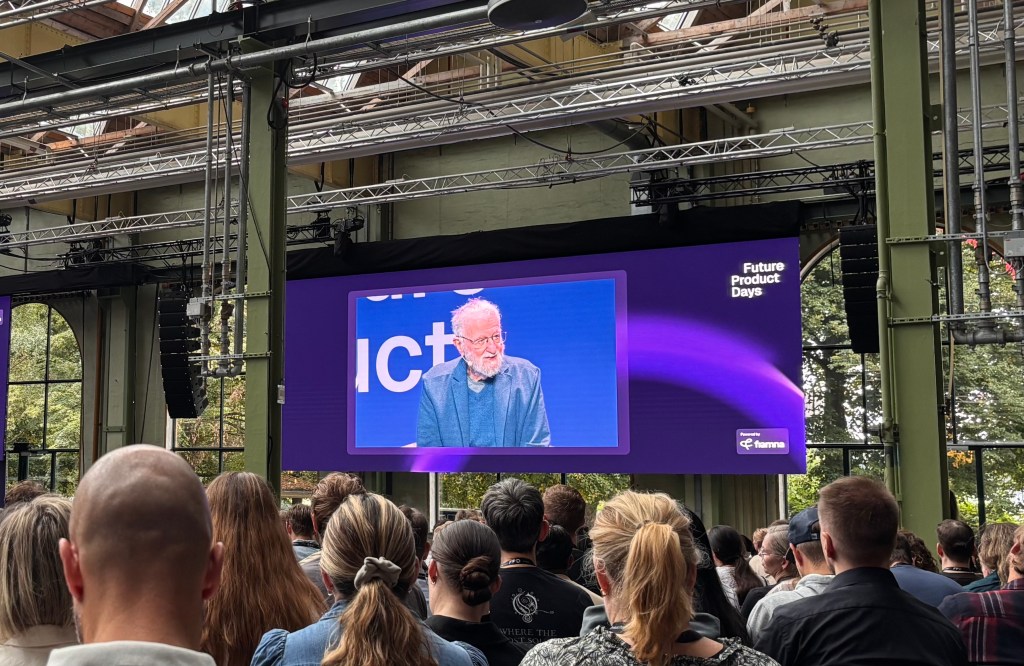
With so much discussion about how our jobs might change, or even disappear, it was refreshing to hear him focus on the opportunities instead. He kept coming back to human-centered design and the importance of understanding the people we’re designing for, regardless of the tools we use.
We left Copenhagen with plenty of questions, but also many ideas we want to try. There’s still so much we don’t know about how AI will change our work, but that’s also what makes this an exciting time to be working in design.




Leave a Reply