

Most jobs at Automattic begin with a trial: a paid project that lets candidates show how they work and think by tackling a real project. The trial helps determine whether someone has the skills, autonomy, and communication abilities to thrive in a distributed environment.
When it was my time to join the trial, I assumed I would be evaluated on design ability, visual judgment, and problem-solving through interface mockups. The brief sounded simple: design an onboarding experience for bloggers on WordPress.com and document the process in writing. What I did not understand at the time was that the writing was not supporting the work. The writing was the work.
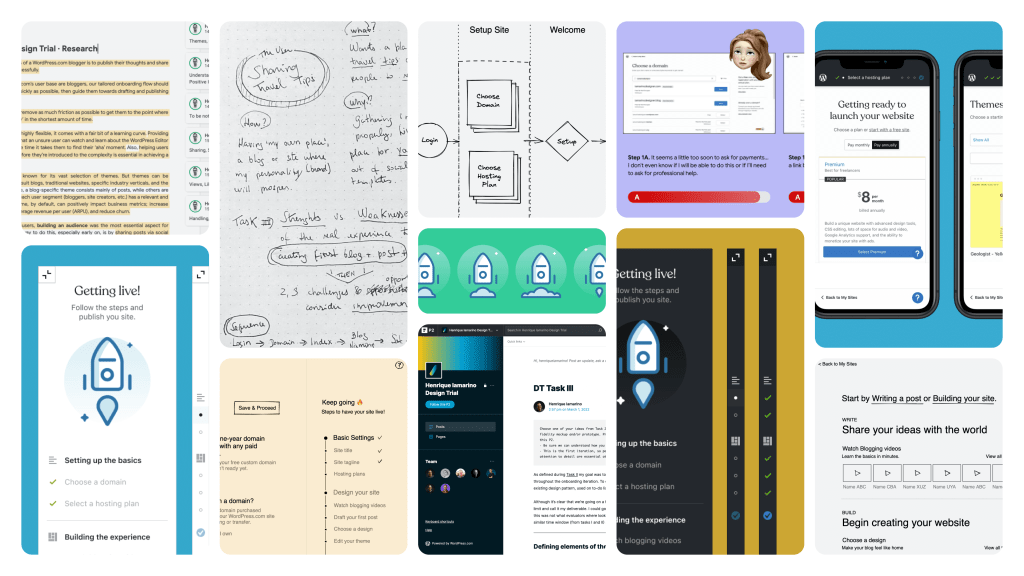
Each task required visual proposals and P2 posts that explained references, reasoning, and possible next steps. I had read Automattic’s creed and took the “communication is oxygen” statement seriously. Because I knew the clarity of my explanations would be decisive, with no live conversations to fill in the gaps, I spent as much time structuring paragraphs as I did arranging layouts.
“I will communicate as much as possible, because it’s the oxygen of a distributed company.”
Quote from the Automattic Creed
When writing becomes the real work
All feedback happened asynchronously through P2 post comments—from reviewers in different time zones, which forced me to abandon any hope of talking my way through incomplete ideas. If something felt unclear in my head, it became painfully visible in my writing. That constraint slowed me down in the best possible way, turning the three-week trial into an exercise in reflection rather than speed.
Those P2s still exist today. They function as a permanent snapshot of how I thought at that moment, preserving not only the solutions I proposed but the mental path that led to them. Revisiting them now feels like opening an old notebook filled with annotations and intentions that never made it into the final designs.
Seeing the trial from the other side
Last year, I joined the Design Hiring group and experienced the process from the opposite side. I felt the difficulty of letting a promising candidate go and the genuine happiness of approving another who was hired and became a colleague. That perspective made the trial feel even more thoughtful and human than I had realized as a candidate.
What stayed with me after four years
Looking back, it’s clear that the trial did not teach me how to design better screens, but it did teach me to clearly expose and document my thinking and to collaborate through writing in a distributed environment where clarity replaces proximity.
The designs I made during that trial are no longer relevant. But the habit of writing carefully still shapes how I work every day.
This post originally appeared on https://iamarino.com/


 Automattic Design
Leave a comment